
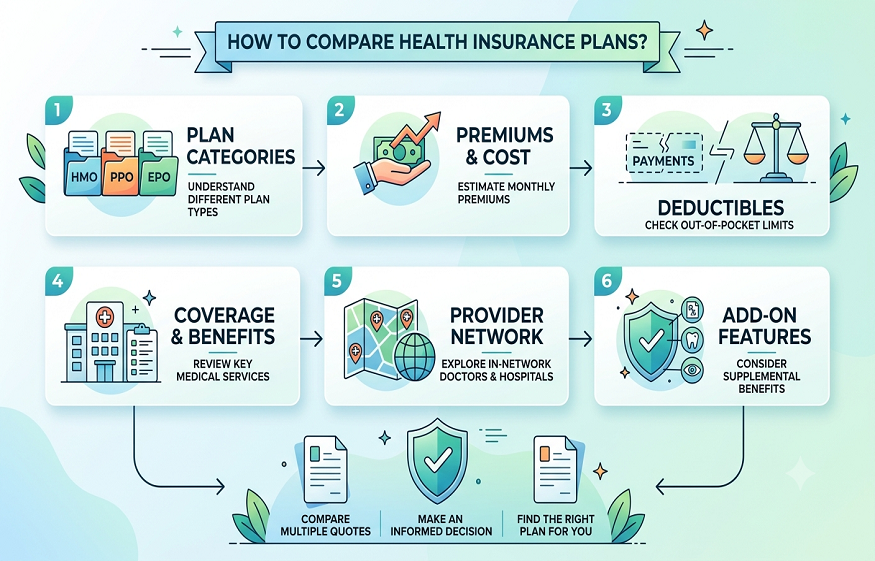
Choosing the right health insurance plan can be challenging, especially when several policies appear to offer similar benefits. Premiums, coverage limits, waiting periods, exclusions, network hospitals and additional features can vary significantly between insurers. Instead of choosing a policy based only on its premium, it is important to compare different health insurance plans based on the coverage and value they provide.
Whether you are buying your first policy or reviewing an existing one, understanding the key factors can help you make a more informed decision.
1. Start With the Sum Insured
The sum insured is the maximum amount the insurer will pay for covered medical expenses during the policy period, subject to the policy terms. When comparing plans, consider whether the coverage is sufficient for your age, location, family size and potential healthcare costs.
A low-premium policy with inadequate coverage may not provide sufficient financial protection during a major hospitalisation. Consider plans that offer a practical balance between affordability and adequate coverage.
2. Compare Premiums Alongside Benefits
Premium is an important factor, but it should not be the only basis for comparison. Two policies with similar premiums may have very different coverage conditions.
Look at what is included for the premium you pay. Check hospitalisation coverage, pre- and post-hospitalisation expenses, day-care procedures, ambulance charges and other applicable benefits. A slightly higher premium may be worthwhile if the policy provides substantially better coverage.
3. Check the Waiting Periods
Health insurance policies commonly have waiting periods for certain medical conditions and treatments. These may include an initial waiting period, a specific waiting period for certain illnesses and a longer waiting period for pre-existing diseases.
Before purchasing a policy, carefully check these conditions. A plan with a shorter applicable waiting period may be more suitable if you expect to need treatment for a condition covered by such restrictions.
4. Understand Exclusions
Every health insurance policy has exclusions-medical treatments or circumstances that are not covered. These can have a significant impact on the actual usefulness of a policy.
Read the policy wording and understand what is excluded before making a decision. Pay particular attention to exclusions related to specific treatments, pre-existing conditions, non-medical expenses and other limitations.
Do not assume that every hospitalisation expense will automatically be reimbursed.
5. Look at the Network Hospital List
Cashless hospitalisation can make the claims process more convenient because eligible expenses can be settled directly between the insurer and the network hospital, subject to policy terms and approval.
When comparing policies, check whether reputed hospitals in your city are included in the insurer’s network. This is particularly important if you have preferred hospitals or live in an area where healthcare options are limited.
Read More: Revolutionizing Healthcare Efficiency with Medical Device ERP Software
6. Evaluate Room Rent and Sub-Limits
Some policies may impose limits on room rent or specific medical procedures. Such restrictions can affect the amount payable during a hospitalisation.
For example, choosing a room that exceeds the eligible room-rent limit could potentially result in proportionate deductions on certain associated expenses, depending on the policy terms.
Therefore, compare room-rent provisions, procedure-specific limits and other sub-limits before purchasing a plan.
7. Consider Individual vs Family Coverage
Your coverage requirements depend on who needs protection. An individual policy may be suitable when you want dedicated coverage for one person. A family floater, on the other hand, provides a shared sum insured across covered family members.
For someone looking for single health insurance, an individual policy can offer dedicated coverage without having to share the sum insured with other family members. However, the right choice depends on your age, health requirements, budget and expected healthcare needs.
8. Check Restoration and No-Claim Benefits
Some health insurance plans offer features such as restoration of the sum insured if the original coverage is exhausted, subject to specific conditions. Others may provide benefits for claim-free years.
These features can add value, but it is important to understand exactly when and how they apply. Do not select a policy simply because it has more features; check whether those features are relevant to your circumstances.
9. Review the Claim Process
A health insurance policy is valuable only when it works effectively when you need it. Before choosing an insurer, consider its claim process, documentation requirements, customer support and available cashless facilities.
You can also review the insurer’s publicly available claim-related information and policy servicing processes. However, remember that past claim experience does not guarantee how a future claim will be handled.
10. Read the Policy Terms Carefully
Finally, read the policy wording, brochure and schedule before making your purchase. Pay attention to definitions, exclusions, waiting periods, renewal conditions, co-payments, deductibles and sub-limits.
Avoid selecting a policy simply because it is inexpensive or has an attractive promotional benefit. The objective should be to find coverage that provides meaningful financial protection while remaining affordable over the long term.
Read More: How Display Technology Tier Affects TV on EMI Pricing and Eligibility
Make an Informed Comparison
Comparing health insurance plans requires looking beyond the premium. Sum insured, coverage, waiting periods, exclusions, network hospitals, room-rent limits, claim procedures and policy features should all be considered together.
There is no single health insurance plan that is ideal for everyone. The best option is one that matches your healthcare needs, financial situation and preferred level of protection. Taking time to compare policies carefully can help you avoid unpleasant surprises and build stronger financial protection against unexpected medical expenses.